
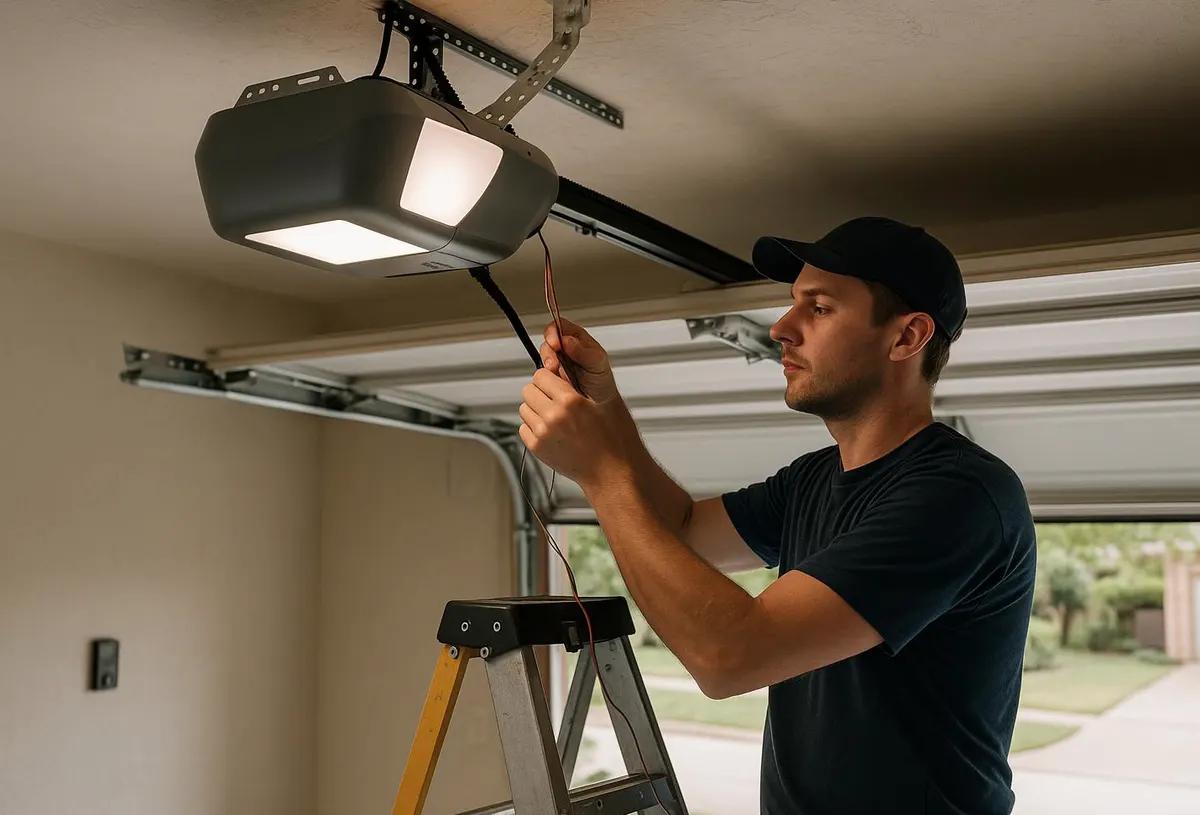
Getting Your Garage Door Ready for Winter, Winter Park Style
The short answer: "winterizing" a garage door in Winter Park isn't about ice and snow. It's about closing out hurricane season, fixing what the summer humidity and storms did to your door, and making sure everything moves freely as the air turns cooler and drier. Do that, and your door will run smoothly through the mild months ahead.
Why Garage Door Prep Looks Different in Central Florida
Most national advice about "winterizing" a garage door assumes freezing temperatures, snow load, and ice on the tracks. That's not what's coming for Winter Park. What you'll actually deal with is the tail end of hurricane season rolling into a drier, cooler stretch. That transition is harder on a garage door than people expect, for a few reasons:
- Humidity swings cause swelling and sticking. Wood panels and wood-composite doors absorb moisture all summer. As the air dries out, they contract — sometimes unevenly, which can throw off alignment that was masked before.
- Storm season leaves hidden damage. Heavy wind-load stress, driving rain, and debris impacts during storm season can loosen hardware, bend tracks slightly, or compromise weatherstripping without an obvious sign until the door starts acting up weeks later.
- Salt air accelerates corrosion. If you're anywhere with coastal exposure, salt-laden air speeds up rust on springs, rollers, and hinges — and surface rust you ignored over the summer gets worse, not better, on its own.
- Afternoon downpour season isn't fully over. Even as temperatures cool, Central Florida can still throw sudden heavy rain at you. Seals and drainage around the door opening still matter.
The Checklist: What to Actually Do
1. Inspect panels and tracks for storm wear
Walk the outside and inside of the door and look for dents, warping, or panels that don't sit flush. Run a hand along the tracks — any bends, even slight ones, will cause the door to bind or roll unevenly. Wind-load stress from storms is a common, under-the-radar cause of track misalignment.
2. Check and replace weatherstripping
The rubber seal along the bottom of the door and around the frame takes a beating from sun, humidity, and rain all summer. If it's cracked, flattened, or pulling away from the door, replace it now. This is cheap insurance against both drafts in cooler weeks and water intrusion during the last storms of the season.
3. Lubricate hinges, rollers, and springs
Humidity leaves a sticky residue on hardware, and salt air speeds up corrosion on top of that. Use a silicone-based garage door lubricant (not WD-40, which attracts dust) on hinges, rollers, and the torsion spring. Do this now, before drier air makes everything move a little stiffer.
4. Test the door's balance
Disconnect the opener by pulling the release cord, then lift the door halfway by hand. It should stay in place on its own. If it drifts down or shoots up, the springs are out of balance — often from the stress of repeated openings during storm prep or power outages over the summer. An unbalanced door puts extra strain on the opener and is a sign spring replacement may be due.
5. Check for rust on springs and hardware
Surface rust on torsion springs isn't just cosmetic — it weakens the metal and makes sudden spring failure more likely. If you see flaking, pitting, or a springs that looks noticeably duller than the rest of the hardware, have it inspected before it becomes a snapped spring on a random Tuesday morning.
6. Test auto-reverse and opener battery backup
Place a block of wood in the door's path and close it — the door should reverse immediately on contact. If it doesn't, that's a safety issue, not a convenience one. While you're at it, check that any battery backup on your opener still holds a charge; storm season outages don't fully stop just because the calendar says November.
7. Clear drainage around the door opening
Leaves, mulch, and debris pushed up against the garage door threshold during fall storms can trap water against the bottom seal, encouraging rot in wood doors and rust on metal ones. A five-minute sweep now prevents a bigger problem later.
Trade-Offs Worth Knowing
You can lubricate and inspect a door yourself in under an hour, and it's worth doing. But some things — rebalancing springs, replacing a bent track, recalibrating opener force settings — require the door to be under tension or require tools most homeowners don't keep around. Pushing through a DIY fix on a spring or cable isn't worth the risk; these components store enough force to cause serious injury if they let go unexpectedly.
When to Call Winter Park Garage Door
If your inspection turns up a door that won't stay balanced, springs with visible rust or wear, a track that's bent from this season's storms, or an opener that won't reliably reverse, it's time to call in a professional rather than keep adjusting things yourself. Winter Park Garage Door handles Preventive Maintenance visits that cover exactly this kind of end-of-season tune-up — lubrication, hardware inspection, balance testing, and weatherstripping checks in one visit. If the issue turns out to be a worn-out spring, our Spring Replacement service gets it swapped safely, with the right spring rated for your door's size and wind-load needs.
Ready to get your door squared away before the season shifts? Call Winter Park Garage Door today and schedule a maintenance visit for your home in Winter Park, FL.